Early one spring morning, while the lawn was still covered with dew, I awoke from a deep and restful slumber to start the day anew. Perched on the rooftop, fresh Owens Corning Shingles, ready to install, Very odd indeed, looking so layered, so tall. One by one out of their bundles, precisely they lay, Not one turn, not one tumble, almost like play. Non-stop they cover this place, such a fast pace, On again, on again, vibrations in time, Hypnotic rhythms, a hypnotic rhyme. Hunger and a grumble, a smile, no time, An appetite can mumble to satisfy lunchtime. Oh my! A loud tummy in need, It’s break-time indeed for the roofing machine. Time to feed—then rise once more, With bread in hand, the roof to restore, A house now whole beneath the sun’s gleam, Built by sweat, shingles, and a well-fed dream.


Be Born From Above...
Silence is the voice of complicity. = more Dr. Pangloss quotes
Be Born From Above...: Abraham Lincoln's Proclamation of Thanksgiving

Followers

About Me

My photo
ajroofsright@gmail.com | Andyroofs = And He Roofs... I love my job, my job loves me... I love it so much I’d do it for free… Yep, his job he loves, come watch and see. Is your tile roof leaking?

Digital Time

Digital Time

Trumped Up

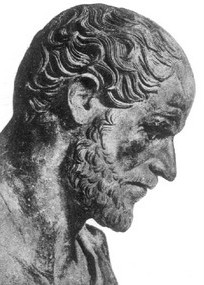
Aristotle The Great

Aristotle the Great

 Aristotle (384 B.C.E.—322 B.C.E.)


ARISTOTLE (384 B.C.E. - 322 B.C.E)

Aristotle is a towering figure in ancient Greek philosophy, who made important contributions to logic, criticism, rhetoric, physics, biology, psychology, mathematics, metaphysics, ethics, and politics. He was a student of Plato for twenty years but is famous for rejecting Plato’s theory of forms. He was more empirically minded than both Plato and Plato’s teacher, Socrates.
A prolific writer, lecturer, and polymath, Aristotle radically transformed most of the topics he investigated. In his lifetime, he wrote dialogues and as many as 200 treatises, of which only 31 survive. These works are in the form of lecture notes and draft manuscripts never intended for general readership. Nevertheless, they are the earliest complete philosophical treatises we still possess.
As the father of western logic, Aristotle was the first to develop a formal system for reasoning. He observed that the deductive validity of any argument can be determined by its structure rather than its content, for example, in the syllogism: All men are mortal; Socrates is a man; therefore, Socrates is mortal. Even if the content of the argument were changed from being about Socrates to being about someone else, because of its structure, as long as the premises are true, then the conclusion must also be true. Aristotelian logic dominated until the rise of modern propositional logic and predicate logic 2000 years later.
The emphasis on good reasoning serves as the backdrop for Aristotle’s other investigations. In his natural philosophy, Aristotle combines logic with observation to make general, causal claims. For example, in his biology, Aristotle uses the concept of species to make empirical claims about the functions and behavior of individual animals. However, as revealed in his psychological works, Aristotle is no reductive materialist. Instead, he thinks of the body as the matter, and the psyche as the form of each living animal.
Though his natural scientific work is firmly based on observation, Aristotle also recognizes the possibility of knowledge that is not empirical. In his metaphysics, he claims that there must be a separate and unchanging being that is the source of all other beings. In his ethics, he holds that it is only by becoming excellent that one could achieve eudaimonia, a sort of happiness or blessedness that constitutes the best kind of human life.
Aristotle was the founder of the Lyceum, a school based in Athens, Greece; and he was the first of the Peripatetics, his followers from the Lyceum. Aristotle’s works, exerted tremendous influence on ancient and medieval thought and continue to inspire philosophers to this day
.


https://blogger.googleusercontent.com/img/b/R29vZ2xl/AVvXsEjTJ-7k6k9D2GEphxuzN4ZUiJYb-zATojJ4DrxZH5Rur0JXzVMAja5Hrdr7QKPFAod2U2MdGVHRbNxlnAhGX_z-7zTbxOCfnJsgNOz7ukcgQycg19xuvtk4toqD9P9bM_-x1zIJ_6mpdYRt/s320/Marcus+Aurelius.png
Aristotle the Great

Sunday, December 29, 2024

Abraham Lincoln's Proclamation of Thanksgiving
 Civil War  |  Primary Source

Abraham Lincoln's Proclamation of Thanksgiving

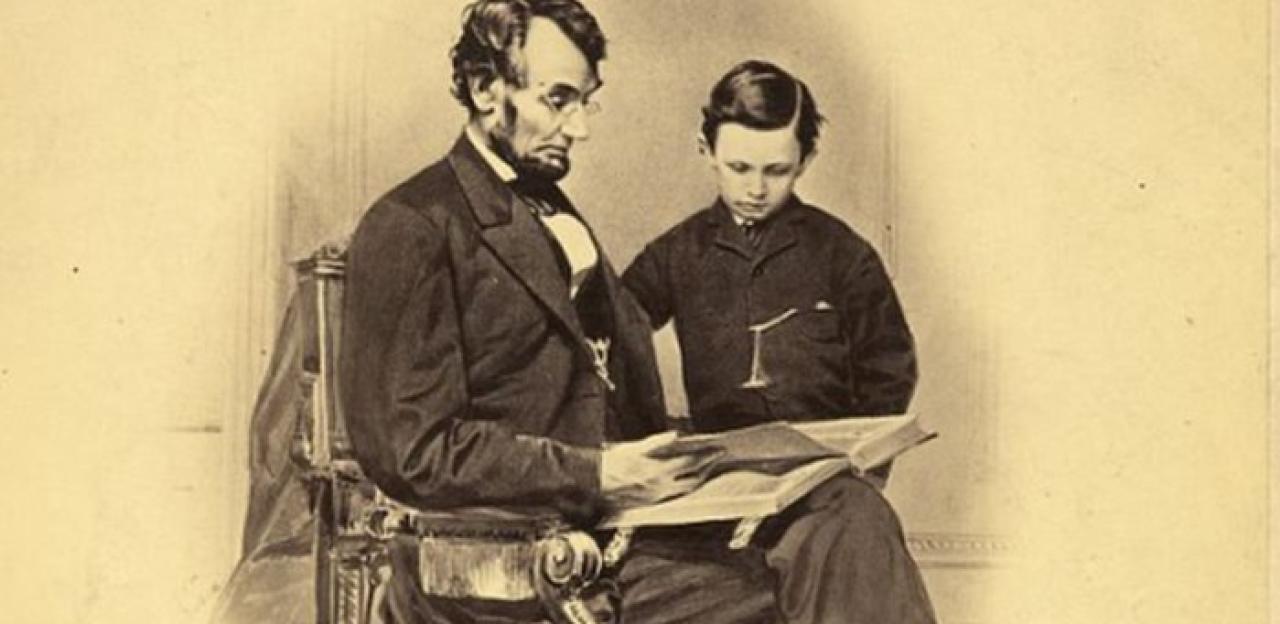
Lincoln Reading

On October 3, 1863, President Lincoln issued a proclamation designating “the last Thursday of November next, as a day of Thanksgiving.” Lincoln’s announcement marked the culmination of a multi-decade campaign by Sarah Josepha Hale to make Thanksgiving into a national holiday. Although Lincoln wrote the vast majority of his state papers, the Thanksgiving Proclamation was in fact drafted by Seward.

Washington DC, October 3, 1863

By the President of the United States of America.

A Proclamation.

The year that is drawing towards its close, has been filled with the blessings of fruitful fields and healthful skies. To these bounties, which are so constantly enjoyed that we are prone to forget the source from which they come, others have been added, which are of so extraordinary a nature, that they cannot fail to penetrate and soften even the heart which is habitually insensible to the ever watchful providence of Almighty God.

In the midst of a civil war of unequalled magnitude and severity, which has sometimes seemed to foreign States to invite and to provoke their aggression, peace has been preserved with all nations, order has been maintained, the laws have been respected and obeyed, and harmony has prevailed everywhere except in the theatre of military conflict; while that theatre has been greatly contracted by the advancing armies and navies of the Union.

Needful diversions of wealth and of strength from the fields of peaceful industry to the national defence, have not arrested the plough, the shuttle or the ship; the axe has enlarged the borders of our settlements, and the mines, as well of iron and coal as of the precious metals, have yielded even more abundantly than heretofore. Population has steadily increased, notwithstanding the waste that has been made in the camp, the siege and the battle-field; and the country, rejoicing in the consciousness of augmented strength and vigor, is permitted to expect continuance of years with large increase of freedom.

No human counsel hath devised nor hath any mortal hand worked out these great things. They are the gracious gifts of the Most High God, who, while dealing with us in anger for our sins, hath nevertheless remembered mercy.

It has seemed to me fit and proper that they should be solemnly, reverently and gratefully acknowledged as with one heart and one voice by the whole American People. I do therefore invite my fellow citizens in every part of the United States, and also those who are at sea and those who are sojourning in foreign lands, to set apart and observe the last Thursday of November next, as a day of Thanksgiving and Praise to our beneficent Father who dwelleth in the Heavens. And I recommend to them that while offering up the ascriptions justly due to Him for such singular deliverances and blessings, they do also, with humble penitence for our national perverseness and disobedience, commend to His tender care all those who have become widows, orphans, mourners or sufferers in the lamentable civil strife in which we are unavoidably engaged, and fervently implore the interposition of the Almighty Hand to heal the wounds of the nation and to restore it as soon as may be consistent with the Divine purposes to the full enjoyment of peace, harmony, tranquillity and Union.

In testimony whereof, I have hereunto set my hand and caused the Seal of the United States to be affixed.

Done at the City of Washington, this Third day of October, in the year of our Lord one thousand eight hundred and sixty-three, and of the Independence of the United States the Eighty-eighth.

By the President: Abraham Lincoln

William H. Seward, Secretary of State

No comments:

Post a Comment