Early one spring morning, while the lawn was still covered with dew, I awoke from a deep and restful slumber to start the day anew. Perched on the rooftop, fresh Owens Corning Shingles, ready to install, Very odd indeed, looking so layered, so tall. One by one out of their bundles, precisely they lay, Not one turn, not one tumble, almost like play. Non-stop they cover this place, such a fast pace, On again, on again, vibrations in time, Hypnotic rhythms, a hypnotic rhyme. Hunger and a grumble, a smile, no time, An appetite can mumble to satisfy lunchtime. Oh my! A loud tummy in need, It’s break-time indeed for the roofing machine. Time to feed—then rise once more, With bread in hand, the roof to restore, A house now whole beneath the sun’s gleam, Built by sweat, shingles, and a well-fed dream.


Be Born From Above...
Silence is the voice of complicity. = more Dr. Pangloss quotes
Be Born From Above...

Followers

Digital Time

Digital Time

Trumped Up

Saturday, January 24, 2026

3 Defining Features of ADHD That Everyone Overlooks

The textbook signs of ADD — inattention, hyperactivity, and impulsivity — fail to reflect several of its most powerful characteristics; the ones that shape your perceptions, emotions, and motivation. Here, Dr. William Dodson explains how to recognize and manage ADHD’s true defining features of rejection sensitivity, emotional hyperarousal, and hyperfocus.

https://www.additudemag.com/symptoms-of-add-hyperarousal-rejection-sensitivity/


By William Dodson, M.D., LF-APA

Updated on August 11, 2025

 THE ADHD BRAIN

3 Defining Features of ADHD That Everyone Overlooks


...continued... 

What can I do to manage an interest-based nervous system?

An effective ADHD management plan needs two parts:

  • medication to level the neurological playing field
  • a new set of rules that teach you how to get engaged on demand


Stimulant medications are very good at keeping the ADHD brain from getting distracted once they are engaged, but they do not help you get engaged in the first place.

Most systems for planning and organization are built for neurotypical brains that use importance and time to spark motivation. Instead, you must create your own “owner’s manual” for sparking interest by focusing on how and when you do well, and creating those circumstances at the outset.

This work is highly personal, and will change over time. It can involve strategies like “body-doubling,” or asking another person to sit with you while you do work. Or “injecting interest” by transforming an otherwise boring task through imagination. For example, an anatomy student who is bored with studying can imagine she is learning the anatomy to save her idol’s life.

What is emotional hyperarousal?

Most people expect ADHD to create visible hyperactivity. In my clinical experience, this only occurs in about 25% of children and 5% of adults. The rest experience an internal feeling of hyperarousal. When I ask people with ADHD to elaborate on it, they say:

  • “I’m always tense. I can never relax.”
  • “I can’t just sit there and watch a TV program with the rest of the family.”
  • “I can’t turn my brain and body off to go to sleep at night.”

People with ADHD have passionate thoughts and emotions that are more intense than those of the average person. Their highs are higher and their lows are lower. This means you may experience both happiness and criticism more powerfully than your peers and loved ones do.

Children with ADHD know they are “different,” which is rarely experienced as a good thing. They may develop low self-esteem because they realize they fail to get engaged and finish what they start, and because children make no distinction between what you do and who you are. Shame can become a dominant emotion into adulthood as harsh internal dialogues, or criticism from others, becomes ingrained.

How do I recognize emotional hyperarousal?

Clinicians are trained to recognize mood disorders, not the increased intensity of moods that comes with ADHD. Many people with ADHD are first misdiagnosed with a mood disorder.

Mood disorders are characterized by moods that have taken on a life of their own, separate from the events of the person’s life, and often last for more than two weeks. Moods created by ADHD are almost always triggered by events and perceptions, and resolve very quickly. They are normal moods in every way except for their intensity.

Clinicians should ask, “When you are upset, do you often ‘get over it’ quickly?” “Do you feel like you can’t rid your brain of a certain thought or idea when you want to?”

What can I do to manage emotional hyperarousal?

To counteract feelings of shame and low self-esteem, people with ADHD need support from other individuals who believe they are a good or worthwhile person. This can be a parent, older sibling, teacher, coach, or even a kind neighbor. Anyone, as long as they think you are good, likeable, and capable – especially when things go wrong. This “cheerleader” must be sincere because people with ADHD are great lie detectors.

A cheerleader’s main message is, “I know you, you’re a good person. If anybody could have overcome these problems by hard work and just sheer ability, it would have been you. So what that tells me is that there’s something we don’t see that’s getting in your way and I want you to know I will be there with you all the way until we figure out what it is and we master that problem.”

The true key to fighting low self-esteem and shame is helping a person with ADHD figure out how to succeed with their unique nervous system. Then, the person with ADHD is not left alone with feelings of shame or blamed for falling short.

3. Rejection Sensitivity

What is rejection sensitivity?

Rejection sensitive dysphoria (RSD) is an intense vulnerability to the perception – not necessarily the reality – of being rejected, teased, or criticized by important people in your life. RSD causes extreme emotional pain that may also be triggered by a sense of failure, or falling short – failing to meet either your own high standards or others’ expectations.

It is a primitive reaction that people with ADHD often struggle to describe. They say, “I can’t find the words to tell you what it feels like, but I can hardly stand it.” Often, people experience RSD as physical pain, like they’ve been stabbed or struck right in the center of their chest.

Often, this intense emotional reaction is hidden from other people. People experiencing it don’t want to talk about it because of the shame they feel over their lack of control, or because they don’t want people to know about this intense vulnerability.

How do I recognize rejection sensitivity?

The question that can help identify RSD is, “For your entire life, have you always been much more sensitive than other people you know to rejection, teasing, criticism, or your own perception that you have failed?”

When a person internalizes the emotional response of RSD, it can look like sudden development of a mood disorder. They may be saddled with a reputation as a “head case” who needs to be “talked off the ledge.” When the emotional response of RSD is externalized, it can look like a flash of rage.

Some people avoid rejection by becoming people pleasers. Others just opt out altogether, and choose not to try because making any effort is so anxiety-provoking.

What can I do to manage rejection sensitivity?

An overwhelming majority of the patients I’ve treated acknowledge experiencing RSD, with many noting that it the most impairing aspect of their ADHD, in part because it does not respond to therapy.

Alpha-agonist medications, like guanfacine and clonidine, can help treat it. When successfully treated, people with RSD report feeling “at peace,” or like they have “emotional armor.” They still see the same things happening that would have previously wounded them, but now it bounces off without injury. They also report that, rather than three or four simultaneous thoughts, they now have just one thought at a time.

and this  https://www.additudemag.com/wp-content/uploads/2018/03/3-Defining-Features-of-ADHD-That-Everyone-Overlooks-2.pdf

Sunday, December 7, 2025

$199 Tesla Pi Phone — Free Starlink for Life, Exposing Apple’s $1,199 iPhone!

Dec 2, 2025

Two New Findings That Mohammed Didn't Exist | Dr. Jay Smith

Two New Findings That Mohammed Didn't Exist | Dr. Jay Smith

Two New Findings That Mohammed Didn't Exist.

Thursday, June 19, 2025

Principles of Scientific Creationism


Core Principles of the Institute for Creation Research

Principles of Scientific Creationism

  • The physical universe of space, time, matter, and energy has not always existed but was supernaturally created by a transcendent personal Creator who alone has existed from eternity.
  • The phenomenon of biological life did not develop by natural processes from inanimate systems but was specially and supernaturally created by the Creator.
  • Each of the major kinds of plants and animals was created functionally complete from the beginning and did not evolve from some other kind of organism. Changes in basic kinds since their first creation are limited to “horizontal” changes (variations) within the kinds, or “downward” changes (e.g., harmful mutations, extinctions).
  • The first human beings did not evolve from an animal ancestry but were specially created in fully human form from the start. Furthermore, the “spiritual” nature of man (self-image, moral consciousness, abstract reasoning, language, will, religious nature, etc.) is itself a supernaturally created entity distinct from mere biological life.
  • The record of Earth history, as preserved in the earth's crust, especially in the rocks and fossil deposits, is primarily a record of catastrophic intensities of natural processes, operating largely within uniform natural laws, rather than one of gradualism and relatively uniform process rates. There are many scientific evidences for a relatively recent creation of the earth and the universe, in addition to strong scientific evidence that most of the earth’s fossiliferous sedimentary rocks were formed in an even more recent global hydraulic cataclysm.
  • Processes today operate primarily within fixed natural laws and relatively uniform process rates, but since these were themselves originally created and are daily maintained by their Creator, there is always the possibility of miraculous intervention in these laws or processes by their Creator. Evidences for such intervention should be scrutinized critically, however, because there must be clear and adequate reason for any such action on the part of the Creator.
  • The universe and life have somehow been impaired since the completion of creation so that imperfections in structure, disease, aging, extinctions, and other such phenomena are the result of “negative” changes in properties and processes occurring in an originally perfect created order.
  • Since the universe and its primary components were created perfect for their purposes in the beginning by a competent and volitional Creator, and since the Creator does remain active in this now-decaying creation, there do exist ultimate purposes and meanings in the universe. Teleological considerations, therefore, are appropriate in scientific studies whenever they are consistent with the actual data of observation. Furthermore, it is reasonable to assume that the creation presently awaits the consummation of the Creator's purpose.
  • Although people are finite and scientific data concerning origins are always circumstantial and incomplete, the human mind (if open to possibility of creation) is able to explore the manifestations of that Creator rationally, scientifically, and teleologically.

Principles of Biblical Creationism

  • The Creator of the universe is a triune God: Father, Son, and Holy Spirit. There is only one eternal and transcendent God, the source of all being and meaning, and He exists in three Persons, each of whom participated in the work of creation.
  • The Bible, consisting of the 39 canonical books of the Old Testament and the 27 canonical books of the New Testament, is the divinely inspired revelation of the Creator to man. Its unique, plenary, verbal inspiration guarantees that these writings, as originally and miraculously given, are infallible and completely authoritative on all matters with which they deal, free from error of any sort, scientific and historical as well as moral and theological.
  • All things in the universe were created and made by God in the six literal days of the creation week described in Genesis 1:12:3, and confirmed in Exodus 20:8-11. The creation record is factual, historical, and perspicuous; thus, all theories of origins or development that involve evolution in any form are false. All things that now exist are sustained and ordered by God’s providential care. However, a part of the spiritual creation, Satan and his angels, rebelled against God after the creation and are attempting to thwart His divine purposes in creation.
  • The first human beings, Adam and Eve, were specially created by God, and all other men and women are their descendants. In Adam, humanity was instructed to exercise “dominion” over all other created organisms, and over the earth itself (an implicit commission for true science, technology, commerce, fine art, and education), but the temptation by Satan and the entrance of sin brought God’s curse on that dominion and on mankind, culminating in death and separation from God as the natural and proper consequence.
  • The biblical record of primeval Earth history in Genesis 1–11 is fully historical and perspicuous, including the creation and Fall of man, the Curse on the creation and its subjection to the bondage of decay, the promised Redeemer, the worldwide cataclysmic deluge in the days of Noah, the postdiluvian renewal of humanity’s commission to subdue the earth (now augmented by the institution of human government), and the origin of nations and languages at the Tower of Babel.
  • The alienation of man from his Creator because of sin can only be remedied by the Creator Himself, who became man in the person of the Lord Jesus Christ through miraculous conception and virgin birth. In Christ were indissolubly united perfect sinless humanity and full deity so that His substitutionary death is the only necessary and sufficient price of humanity’s redemption. That the redemption was completely efficacious is assured by His bodily resurrection from the dead and ascension into heaven; the resurrection of Christ is thus the focal point of history, assuring the consummation of God’s purposes in creation.
  • The final restoration of creation’s perfection is yet future, but individuals can immediately be restored to fellowship with their Creator on the basis of His redemptive work on their behalf, receiving forgiveness and eternal life solely through personal trust in the Lord Jesus Christ, accepting Him not only as estranged Creator but also as reconciling Redeemer and coming King. Those who reject Him, however, or who neglect to believe on Him thereby continue in their state of rebellion and must ultimately be consigned to the everlasting fire prepared for the devil and his angels.
  • The eventual accomplishment of God’s eternal purposes in creation, with the removal of His curse and the restoration of all things to divine perfection, will take place at the personal bodily return to Earth of Jesus Christ to judge and purge sin and to establish His eternal kingdom.
  • Each believer should participate in the “ministry of reconciliation” by seeking both to bring individuals back to God in Christ (the Great Commission) and to “subdue the earth” for God’s glory (the Edenic–Noahic Commission). The three institutions established by the Creator for the implementation of His purposes in this world (home, government, church) should be honored and supported as such.

- Creation Podcast

Friday, May 23, 2025

Thursday, May 22, 2025

Galaxy Roofing


The Truth About the Bible and Early Christianity: Wes Huff... ...

May 20, 2025

Sunday, January 19, 2025

Let’s Go With God

-

Let’s Go With God

👆January 18, 2025☝

When Jesus walked this earth, there was nothing He did, said, or thought that was not in tandem with His Heavenly Father. As a result, His mission was accomplished and His ministry impacted the entire world. Likewise, as we seek to live the Christian life, we must do so with complete dependence on the Lord. Let’s go with God!


Sunday, December 29, 2024

Abraham Lincoln's Proclamation of Thanksgiving

 Civil War  |  Primary Source

Abraham Lincoln's Proclamation of Thanksgiving

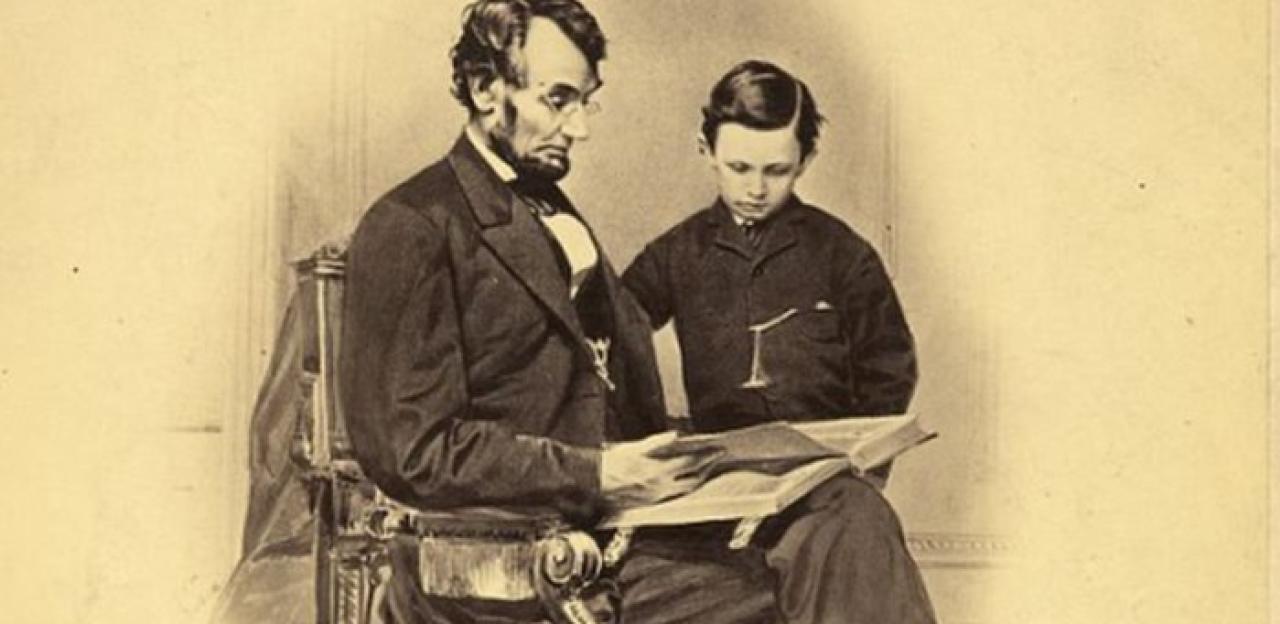
Lincoln Reading

On October 3, 1863, President Lincoln issued a proclamation designating “the last Thursday of November next, as a day of Thanksgiving.” Lincoln’s announcement marked the culmination of a multi-decade campaign by Sarah Josepha Hale to make Thanksgiving into a national holiday. Although Lincoln wrote the vast majority of his state papers, the Thanksgiving Proclamation was in fact drafted by Seward.

Washington DC, October 3, 1863

By the President of the United States of America.

A Proclamation.

The year that is drawing towards its close, has been filled with the blessings of fruitful fields and healthful skies. To these bounties, which are so constantly enjoyed that we are prone to forget the source from which they come, others have been added, which are of so extraordinary a nature, that they cannot fail to penetrate and soften even the heart which is habitually insensible to the ever watchful providence of Almighty God.

In the midst of a civil war of unequalled magnitude and severity, which has sometimes seemed to foreign States to invite and to provoke their aggression, peace has been preserved with all nations, order has been maintained, the laws have been respected and obeyed, and harmony has prevailed everywhere except in the theatre of military conflict; while that theatre has been greatly contracted by the advancing armies and navies of the Union.

Needful diversions of wealth and of strength from the fields of peaceful industry to the national defence, have not arrested the plough, the shuttle or the ship; the axe has enlarged the borders of our settlements, and the mines, as well of iron and coal as of the precious metals, have yielded even more abundantly than heretofore. Population has steadily increased, notwithstanding the waste that has been made in the camp, the siege and the battle-field; and the country, rejoicing in the consciousness of augmented strength and vigor, is permitted to expect continuance of years with large increase of freedom.

No human counsel hath devised nor hath any mortal hand worked out these great things. They are the gracious gifts of the Most High God, who, while dealing with us in anger for our sins, hath nevertheless remembered mercy.

It has seemed to me fit and proper that they should be solemnly, reverently and gratefully acknowledged as with one heart and one voice by the whole American People. I do therefore invite my fellow citizens in every part of the United States, and also those who are at sea and those who are sojourning in foreign lands, to set apart and observe the last Thursday of November next, as a day of Thanksgiving and Praise to our beneficent Father who dwelleth in the Heavens. And I recommend to them that while offering up the ascriptions justly due to Him for such singular deliverances and blessings, they do also, with humble penitence for our national perverseness and disobedience, commend to His tender care all those who have become widows, orphans, mourners or sufferers in the lamentable civil strife in which we are unavoidably engaged, and fervently implore the interposition of the Almighty Hand to heal the wounds of the nation and to restore it as soon as may be consistent with the Divine purposes to the full enjoyment of peace, harmony, tranquillity and Union.

In testimony whereof, I have hereunto set my hand and caused the Seal of the United States to be affixed.

Done at the City of Washington, this Third day of October, in the year of our Lord one thousand eight hundred and sixty-three, and of the Independence of the United States the Eighty-eighth.

By the President: Abraham Lincoln

William H. Seward, Secretary of State

3 Defining Features of ADHD That Everyone Overlooks

The textbook signs of ADD — inattention, hyperactivity, and impulsivity — fail to reflect several of its most powerful characteristics; the ...