Early one spring morning, while the lawn was still covered with dew, I awoke from a deep and restful slumber to start the day anew. Perched on the rooftop, fresh Owens Corning Shingles, ready to install, Very odd indeed, looking so layered, so tall. One by one out of their bundles, precisely they lay, Not one turn, not one tumble, almost like play. Non-stop they cover this place, such a fast pace, On again, on again, vibrations in time, Hypnotic rhythms, a hypnotic rhyme. Hunger and a grumble, a smile, no time, An appetite can mumble to satisfy lunchtime. Oh my! A loud tummy in need, It’s break-time indeed for the roofing machine. Time to feed—then rise once more, With bread in hand, the roof to restore, A house now whole beneath the sun’s gleam, Built by sweat, shingles, and a well-fed dream.


Be Born From Above...
Silence is the voice of complicity. = more Dr. Pangloss quotes
Be Born From Above...: Should Christians read Jesus calling?

Followers

About Me

My photo
ajroofsright@gmail.com | Andyroofs = And He Roofs... I love my job, my job loves me... I love it so much I’d do it for free… Yep, his job he loves, come watch and see. Is your tile roof leaking?

Digital Time

Digital Time

Trumped Up

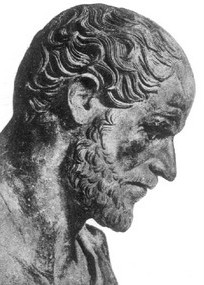
Aristotle The Great

Aristotle the Great

 Aristotle (384 B.C.E.—322 B.C.E.)


ARISTOTLE (384 B.C.E. - 322 B.C.E)

Aristotle is a towering figure in ancient Greek philosophy, who made important contributions to logic, criticism, rhetoric, physics, biology, psychology, mathematics, metaphysics, ethics, and politics. He was a student of Plato for twenty years but is famous for rejecting Plato’s theory of forms. He was more empirically minded than both Plato and Plato’s teacher, Socrates.
A prolific writer, lecturer, and polymath, Aristotle radically transformed most of the topics he investigated. In his lifetime, he wrote dialogues and as many as 200 treatises, of which only 31 survive. These works are in the form of lecture notes and draft manuscripts never intended for general readership. Nevertheless, they are the earliest complete philosophical treatises we still possess.
As the father of western logic, Aristotle was the first to develop a formal system for reasoning. He observed that the deductive validity of any argument can be determined by its structure rather than its content, for example, in the syllogism: All men are mortal; Socrates is a man; therefore, Socrates is mortal. Even if the content of the argument were changed from being about Socrates to being about someone else, because of its structure, as long as the premises are true, then the conclusion must also be true. Aristotelian logic dominated until the rise of modern propositional logic and predicate logic 2000 years later.
The emphasis on good reasoning serves as the backdrop for Aristotle’s other investigations. In his natural philosophy, Aristotle combines logic with observation to make general, causal claims. For example, in his biology, Aristotle uses the concept of species to make empirical claims about the functions and behavior of individual animals. However, as revealed in his psychological works, Aristotle is no reductive materialist. Instead, he thinks of the body as the matter, and the psyche as the form of each living animal.
Though his natural scientific work is firmly based on observation, Aristotle also recognizes the possibility of knowledge that is not empirical. In his metaphysics, he claims that there must be a separate and unchanging being that is the source of all other beings. In his ethics, he holds that it is only by becoming excellent that one could achieve eudaimonia, a sort of happiness or blessedness that constitutes the best kind of human life.
Aristotle was the founder of the Lyceum, a school based in Athens, Greece; and he was the first of the Peripatetics, his followers from the Lyceum. Aristotle’s works, exerted tremendous influence on ancient and medieval thought and continue to inspire philosophers to this day
.


https://blogger.googleusercontent.com/img/b/R29vZ2xl/AVvXsEjTJ-7k6k9D2GEphxuzN4ZUiJYb-zATojJ4DrxZH5Rur0JXzVMAja5Hrdr7QKPFAod2U2MdGVHRbNxlnAhGX_z-7zTbxOCfnJsgNOz7ukcgQycg19xuvtk4toqD9P9bM_-x1zIJ_6mpdYRt/s320/Marcus+Aurelius.png
Aristotle the Great

Thursday, February 24, 2022

Should Christians read Jesus calling?

Should Christians read Jesus calling?


The great danger of faddish, new age books like "Jesus Calling" is that they drive a wedge between God’s people and His Word, encouraging them to look beyond the scope of Scripture for additional words from the Lord. 
In simple terms, they devalue the Bible and elevate emotional experiences and imaginary voices to the level of divine authority. 
And when anything you hear or feel could be the Lord speaking, you leave yourself open to all sorts of heresy and satanic lies. 
God’s people need to be wary of anyone who assumes to speak for Him. 
We need to defend the authority of His Word against all pretenders. 
And we need to help shepherd other believers away from the popular desire for special revelation and back to the all-sufficient Word of God. 
I like devotional books, but books that point us back to the Word of God, not medieval mysticism.


Unfortunately, many Christian publishers today 'sell out' to publish anything that sells even if it promotes theological error.


Burn this book
To subscribe to our podcast, click here! http://wwutt.podbean.com
For a transcript of this video, click here: http://www.wwutt.com/2020/02/whats-wr...

More information on this "Jesus Calling" book here is another video 
__________________________________________________

NIV version says this... 
'Have nothing to do with godless myths and old wives’ tales;
rather, train yourself to be godly. For physical training is
of some value, but godliness has value for all things,
holding promise for both the present life and the life to come. '

NASB1995 version says this...
'But have nothing to do with worldly fables fit only for
old women. On the other hand, discipline yourself for
the purpose of godliness; for bodily discipline is only of
little profit, but godliness is profitable for all things,
since it holds promise for the present life and
also for the life to come. ' 1 Timothy 4:7-8 https://my.bible.com/bible/100/1TI.4.7-8

_____________________________
Here are good Pastors to listen to.


No comments:

Post a Comment