Early one spring morning, while the lawn was still covered with dew, I awoke from a deep and restful slumber to start the day anew. Perched on the rooftop, fresh Owens Corning Shingles, ready to install, Very odd indeed, looking so layered, so tall. One by one out of their bundles, precisely they lay, Not one turn, not one tumble, almost like play. Non-stop they cover this place, such a fast pace, On again, on again, vibrations in time, Hypnotic rhythms, a hypnotic rhyme. Hunger and a grumble, a smile, no time, An appetite can mumble to satisfy lunchtime. Oh my! A loud tummy in need, It’s break-time indeed for the roofing machine. Time to feed—then rise once more, With bread in hand, the roof to restore, A house now whole beneath the sun’s gleam, Built by sweat, shingles, and a well-fed dream.


Be Born From Above...
Silence is the voice of complicity. = more Dr. Pangloss quotes
Be Born From Above...: Romans 8:11

Followers

About Me

My photo
ajroofsright@gmail.com | Andyroofs = And He Roofs... I love my job, my job loves me... I love it so much I’d do it for free… Yep, his job he loves, come watch and see. Is your tile roof leaking?

Digital Time

Digital Time

Trumped Up

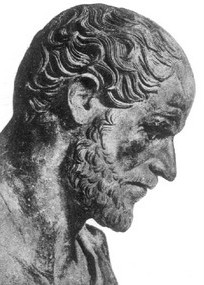
Aristotle The Great

Aristotle the Great

 Aristotle (384 B.C.E.—322 B.C.E.)


ARISTOTLE (384 B.C.E. - 322 B.C.E)

Aristotle is a towering figure in ancient Greek philosophy, who made important contributions to logic, criticism, rhetoric, physics, biology, psychology, mathematics, metaphysics, ethics, and politics. He was a student of Plato for twenty years but is famous for rejecting Plato’s theory of forms. He was more empirically minded than both Plato and Plato’s teacher, Socrates.
A prolific writer, lecturer, and polymath, Aristotle radically transformed most of the topics he investigated. In his lifetime, he wrote dialogues and as many as 200 treatises, of which only 31 survive. These works are in the form of lecture notes and draft manuscripts never intended for general readership. Nevertheless, they are the earliest complete philosophical treatises we still possess.
As the father of western logic, Aristotle was the first to develop a formal system for reasoning. He observed that the deductive validity of any argument can be determined by its structure rather than its content, for example, in the syllogism: All men are mortal; Socrates is a man; therefore, Socrates is mortal. Even if the content of the argument were changed from being about Socrates to being about someone else, because of its structure, as long as the premises are true, then the conclusion must also be true. Aristotelian logic dominated until the rise of modern propositional logic and predicate logic 2000 years later.
The emphasis on good reasoning serves as the backdrop for Aristotle’s other investigations. In his natural philosophy, Aristotle combines logic with observation to make general, causal claims. For example, in his biology, Aristotle uses the concept of species to make empirical claims about the functions and behavior of individual animals. However, as revealed in his psychological works, Aristotle is no reductive materialist. Instead, he thinks of the body as the matter, and the psyche as the form of each living animal.
Though his natural scientific work is firmly based on observation, Aristotle also recognizes the possibility of knowledge that is not empirical. In his metaphysics, he claims that there must be a separate and unchanging being that is the source of all other beings. In his ethics, he holds that it is only by becoming excellent that one could achieve eudaimonia, a sort of happiness or blessedness that constitutes the best kind of human life.
Aristotle was the founder of the Lyceum, a school based in Athens, Greece; and he was the first of the Peripatetics, his followers from the Lyceum. Aristotle’s works, exerted tremendous influence on ancient and medieval thought and continue to inspire philosophers to this day
.


https://blogger.googleusercontent.com/img/b/R29vZ2xl/AVvXsEjTJ-7k6k9D2GEphxuzN4ZUiJYb-zATojJ4DrxZH5Rur0JXzVMAja5Hrdr7QKPFAod2U2MdGVHRbNxlnAhGX_z-7zTbxOCfnJsgNOz7ukcgQycg19xuvtk4toqD9P9bM_-x1zIJ_6mpdYRt/s320/Marcus+Aurelius.png
Aristotle the Great

Wednesday, July 7, 2021

Romans 8:11

 A God of my understanding is Jesus Christ.


Eternal Life There’s More to It Than You Think

Andrew Wommack Ministries

Someone might say, “Eternal life is living forever.” But that’s not it. No one ceases to exist when they die. Everyone lives forever in either heaven or hell. “Well then, eternal life must be living forever in heaven instead of hell.” That’s not it either.

John 3:36 says, “He that believeth on the Son hath everlasting life: and he that believeth not the Son shall not see life; but the wrath of God abideth on him.”

Everlasting life is a present-tense possession. It’s not something that begins when we get to heaven. There are a number of scriptures that speak of everlasting life as something we possess in this life (John 4:14; 5:24; 6:27; 6:40, 47).

So, the question remains, “What is everlasting life?” This is very important. John 3:16 says this is the reason that Jesus came.

“For God so loved the world, that he gave his only begotten Son, that whosoever believeth in him should not perish, but have everlasting life.”

Many people have mistakenly thought that the goal of salvation is the forgiveness of sin to avoid hell. That’s not what John 3:16 is saying. Sure, not perishing in hell is an important part of what Jesus came to do. He accomplished that by paying the debt for all our sins, past, present, and even the ones we haven’t committed yet.

If that’s all there is to salvation, that’s more than any of us deserve, and it would still be worth preaching. But salvation is much, much more than getting our sins forgiven so we can go to heaven instead of hell.

Let me say it this way. If all you did was ask Jesus to forgive your sins so you wouldn’t perish in hell, then you are missing out on eternal life.

Sin was a barrier that stood between us and a holy God. It had to be removed. That’s exactly what Jesus did, and He did it well. Sin is no longer standing between God and man (2 Cor. 5:17). But to what does that entitle us?

Sure, it entitles us to live forever with God in heaven. That’s wonderful. But there are tremendous benefits right here, right now, on earth. Eternal life is one of those benefits.

Jesus defined eternal life for us in John 17:3. That verse says,

“And this is life eternal, that they might know thee the only true God, and Jesus Christ, whom thou hast sent.”

No comments:

Post a Comment