About Me

- AJ Roofs Right
- ajroofsright@gmail.com | Andyroofs = And He Roofs... I love my job, my job loves me... I love it so much I’d do it for free… Yep, his job he loves, come watch and see. Is your tile roof leaking?
Aristotle The Great
Aristotle the Great
Aristotle (384 B.C.E.—322 B.C.E.)ARISTOTLE (384 B.C.E. - 322 B.C.E)
Aristotle is a towering figure in ancient Greek philosophy, who made important contributions to logic, criticism, rhetoric, physics, biology, psychology, mathematics, metaphysics, ethics, and politics. He was a student of Plato for twenty years but is famous for rejecting Plato’s theory of forms. He was more empirically minded than both Plato and Plato’s teacher, Socrates.
ARISTOTLE (384 B.C.E. - 322 B.C.E)
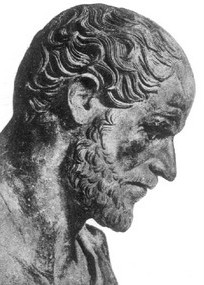
Aristotle is a towering figure in ancient Greek philosophy, who made important contributions to logic, criticism, rhetoric, physics, biology, psychology, mathematics, metaphysics, ethics, and politics. He was a student of Plato for twenty years but is famous for rejecting Plato’s theory of forms. He was more empirically minded than both Plato and Plato’s teacher, Socrates.
A prolific writer, lecturer, and polymath, Aristotle radically transformed most of the topics he investigated. In his lifetime, he wrote dialogues and as many as 200 treatises, of which only 31 survive. These works are in the form of lecture notes and draft manuscripts never intended for general readership. Nevertheless, they are the earliest complete philosophical treatises we still possess.
As the father of western logic, Aristotle was the first to develop a formal system for reasoning. He observed that the deductive validity of any argument can be determined by its structure rather than its content, for example, in the syllogism: All men are mortal; Socrates is a man; therefore, Socrates is mortal. Even if the content of the argument were changed from being about Socrates to being about someone else, because of its structure, as long as the premises are true, then the conclusion must also be true. Aristotelian logic dominated until the rise of modern propositional logic and predicate logic 2000 years later.
The emphasis on good reasoning serves as the backdrop for Aristotle’s other investigations. In his natural philosophy, Aristotle combines logic with observation to make general, causal claims. For example, in his biology, Aristotle uses the concept of species to make empirical claims about the functions and behavior of individual animals. However, as revealed in his psychological works, Aristotle is no reductive materialist. Instead, he thinks of the body as the matter, and the psyche as the form of each living animal.
Though his natural scientific work is firmly based on observation, Aristotle also recognizes the possibility of knowledge that is not empirical. In his metaphysics, he claims that there must be a separate and unchanging being that is the source of all other beings. In his ethics, he holds that it is only by becoming excellent that one could achieve eudaimonia, a sort of happiness or blessedness that constitutes the best kind of human life.
Aristotle was the founder of the Lyceum, a school based in Athens, Greece; and he was the first of the Peripatetics, his followers from the Lyceum. Aristotle’s works, exerted tremendous influence on ancient and medieval thought and continue to inspire philosophers to this day.
Monday, November 29, 2021

Friday, November 5, 2021
David Phelps - We Shall Behold Him (Live)
From Suffering to Glory
Romans 8: 18-30
18For I consider that 2 Cor. 4:17; (1 Pet. 1:6; 4:13)the sufferings of this present time are not worthy to be compared with the glory which shall be revealed in us.
19For (2 Pet. 3:13)the earnest expectation of the creation eagerly waits for the revealing of the sons of God.
20For Gen. 3:17–19the creation was subjected to futility, not willingly, but because of Him who subjected it in hope;
21because the creation itself also will be delivered from the bondage of corruption into the glorious (2 Cor. 3:17); Gal. 5:1, 13liberty of the children of God.
22For we know that the whole creation Jer. 12:4, 11groans and labors with birth pangs together until now.
23Not only that, but we also who have 2 Cor. 5:5; Eph. 1:14the firstfruits of the Spirit, 2 Cor. 5:2, 4even we ourselves groan (Luke 20:36)within ourselves, eagerly waiting for the adoption, the Luke 21:28; Eph. 1:14; 4:30; (Phil. 3:20, 21)redemption of our body.
24For we were saved in this hope, but Rom. 4:18; 2 Cor. 5:7; Heb. 11:1hope that is seen is not hope; for why does one still hope for what he sees?
25But if we hope for what we do not see, we eagerly wait for it with perseverance.
26Likewise the Spirit also helps in our weaknesses. For Matt. 20:22; 2 Cor. 12:8we do not know what we should pray for as we ought, but John 14:16; Rom. 8:15; Eph. 6:18the Spirit Himself makes intercession for us with groanings which cannot be uttered.
27Now 1 Chr. 28:9He who searches the hearts knows what the mind of the Spirit is, because He makes intercession for the saints 1 John 5:14according to the will of God.
28 And we know that all things work together for good to those who love God, to those
2 Tim. 1:9who are the called according to His purpose.
29For whom 2 Tim. 2:19He foreknew, Rom. 9:23; 1 Cor. 2:7; Eph. 1:5, 11He also predestined (2 Cor. 3:18)to be conformed to the image of His Son, (Col. 1:15, 18); Heb. 1:6that He might be the firstborn among many brethren.
30Moreover whom He predestined, these He also Rom. 8:28; 9:24; 1 Cor. 1:9; Gal. 1:6, 15; 5:8; Eph. 1:11; 3:11; 2 Thess. 2:14; (Heb. 9:15; 1 Pet. 2:9; 3:9)called; whom He called, these He also 1 Cor. 6:11; (Gal. 2:16)justified; and whom He justified, these He also John 17:22; Rom. 8:21glorified.
Romans 8:18-30
https://my.bible.com/bible/114/ROM.8.18-30
Subscribe to:
Comments (Atom)